VR (virtual reality) is digital content accessible through a VR helmet, and interaction inside is carried out using controllers.
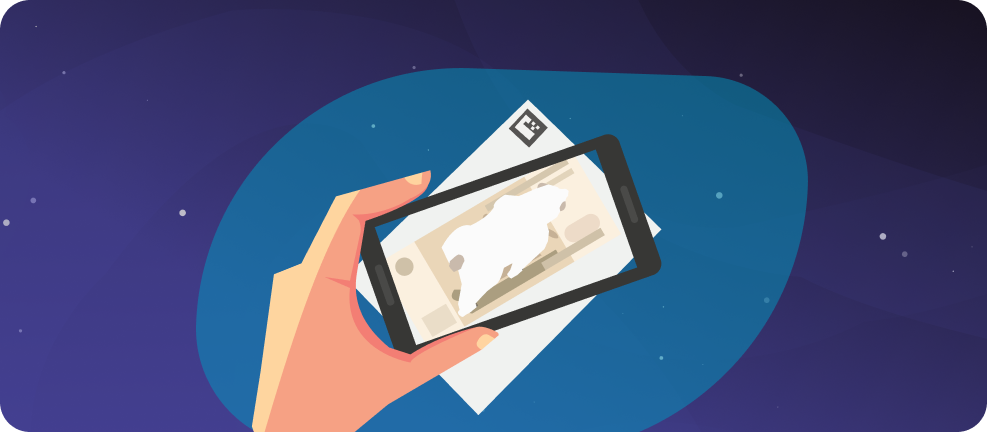
We develop AR applications for various fields, including marketing, education, entertainment and industry.
We create AR content that harmoniously fits into the real environment, providing high accuracy and realism.
Our AR applications are equipped with a variety of interactive elements that make the interaction with the application interesting and exciting.
Our apps run on a variety of platforms, including iOS, Android, and specialized AR devices.
The cost of developing an AR application depends on the complexity of the functionality, the number of platforms, and the level of detail of 3D graphics. For example:
Simple applications (for example, promo campaigns with basic visualization) cost from 200,000 rubles.
Gaming or complex business solutions (with GPS integration, animation, or multiplayer mode) — from 1.5 to 5 million rubles.
Web solutions (working through the browser) they may be cheaper, but they have limitations in functionality.
The price is affected:
Technical complexity: for example, object recognition or integration with the API.
Design and animations: create realistic 3D models and interface.
Testing on different devices and operating systems.
Publishing in the App Store or Google Play.
Companies often offer a free evaluation of the project on request in order to determine the budget more precisely.
AR application development is the process of creating software that complements the real world with digital elements (such as 3D models, animations, or interactive objects) using mobile devices or special glasses. For example, applications can overlay virtual furniture into an interior or animate characters in games.
Key features include:
Visualization of objects in the real environment, which allows you to "try on" goods before buying.
Interactive interaction with virtual elements through the smartphone screen.
Integration with tools ARKit (for iOS) and ARCore (for Android), as well as cross-platform solutions Unity and Vuforia.
Support for various types of AR: marker-based (based on QR codes), marker-free (using device sensors) and mixed reality.
Such applications are used not only for entertainment, but also in education, retail, and even medicine, helping to visualize complex data or conduct training.
The following tools are used to develop augmented reality mobile applications:
Engines: Unity (with AR Foundation support) and Unreal Engine — for creating cross-platform solutions with high-quality graphics.
SDK: ARKit (iOS), ARCore (Android), as well as alternatives Wikitude and Vuforia that support surface and object recognition.
3D modeling: Blender for creating animations and models.
Programming languages: Java, Kotlin (Android), Swift (iOS), and C# (for Unity).
Performance optimization for different devices and testing in real-world conditions (for example, under different lighting conditions) are important aspects. For complex projects geolocation games, integration with cloud services and APIs is required.
AR mobile applications are actively used in various fields:
Retail and marketing: virtual fitting rooms for clothes or cosmetics, which increases audience engagement and reduces returns.
Education: interactive training programs where students can interact with 3D models (for example, anatomical simulators).
Real estate and design: visualization of furniture in the interior or buildings on a real scale.
Game mechanics: similar to Pokémon Go, which combine geolocation and augmented reality.
For businesses, this is a way to increase sales conversion, improve customer experience, and stand out in the market. In everyday life, AR simplifies navigation, learning, and entertainment, making interaction with the digital world more intuitive.
To develop an AR application, it is important:
Determine the goal and audience: decide whether it will be a game, an educational product, or a business tool.
Choose a platform: iOS (ARKit), Android (ARCore) or a cross-platform solution (Unity).
Create a prototype: Start with a minimal version (MVP) to test the idea.
Take into account technical nuances: for example, support for different devices and accurate tracking of objects in space.
Test in real-world conditions: Check how the app works in different lighting conditions and on different surfaces.
Our company offers consultation and a full development cycle — from idea to publication. To get started, you can leave a request on the studio's website, which will help you estimate the budget and deadlines.